
Anticipatory Grief and Pet Loss: How Fear of Losing Your Pet Affects the Time You Have Together

When we love an animal deeply, we become vulnerable in a very particular way.
Our animals participate in everyday life with us. They nudge us awake in the morning, move through our routines with us, curl up beside us on the couch, greet us eagerly when we return home, and comfort us when we hurt. They fill our hearts with joy through their play, quirks, and funny antics. Over time, they turn ordinary days into cherished memories and a house into home.
For many of us, animals also restore something tender in our hearts. Where human relationships may have disappointed, wounded, or failed us, animals often offer a kind of love that feels steady and safe. They help us believe in love again.
With such a profound connection, many pet parents carry an underlying fear: What will I do when my animal dies? How will I handle life without them? What if I cannot cope with the loss?
That fear is called anticipatory grief.
Anticipatory grief describes the fear, sadness, anger, dread, and other feelings that arise before an expected loss. Sometimes we experience it when an animal grows elderly or falls ill. But it can also surface when an animal still seems young and healthy. Many people begin worrying about their animal’s death long before any immediate reason for concern arises. They brace themselves for the day it will happen, the pain they will feel, and the emptiness they fear will follow.
Although some anticipatory grief is natural, an excessive focus on future loss can diminish our ability to be present with our animals now.
Let’s look more closely at how anticipatory grief shows up in relationships with animals and how we can meet it with greater presence.

How Fear of Loss Impacts the Time We Have With Our Animals
In relationships with animals, anticipatory grief is especially common. Their life spans usually run shorter than ours, so from the moment we attach to them, some part of us knows we will likely have to say goodbye one day.
In many ways, this emotional turmoil grows directly from love. If we did not care so deeply, the thought of losing our animal would not touch us so profoundly. The more we love them, the more vulnerable we may feel to the possibility of loss. When love takes up more space, grief can spill across time, surfacing even before loss arrives. In that sense, anticipatory grief reveals how much our animals mean to us.
This grief can feel especially intense because animals often accompany us through some of the most formative chapters of our lives. They witness breakups, moves, illnesses, marriages, grief, reinvention, and new beginnings. They stand beside us while we become who we are.
For example, someone may adopt a dog in college, and that dog stays through the uncertain years of early adulthood, dating, heartbreak, and building a life. Another person may find a cat after a divorce, and that animal becomes a stabilizing presence through healing and transition. When animals accompany us through major life chapters, they become intertwined with both our memories and our identity during that time.
So when we fear losing them, we often fear more than the absence of their companionship. We may also fear losing the version of ourselves who felt loved and comforted by them during that particular chapter of life.
Still, even when anticipatory grief makes sense, it can shape the relationship in painful ways. One of the hardest parts of anticipatory grief involves how it changes the time we still have with our animals. Instead of simply being with them, we begin measuring time. We track every sign of aging: every gray hair, every wobbly step. We feel panic after a long nap, anxiety after a small change in appetite, or dread each time they slow down. As the nervous system braces for loss, the mind moves into the future while life continues unfolding here, in the present.
When we repeatedly project ourselves into a future loss and let it overshadow the life still unfolding in front of us, we add suffering to suffering. Instead of simply responding to loss as it comes, we begin grieving in advance over and over again, rehearsing the pain long before the moment arrives. The pure joy we might otherwise experience with our animals becomes clouded by sadness, altering our experience of the relationship in the here-and-now.
Of course, some anticipatory grief can help. It can prepare us for what lies ahead and encourage us to embrace the present more fully, savoring what might otherwise feel ordinary. But when it overtakes the relationship, it can diminish our ability to remain present, grounded, and connected in a way that honors both our animal and ourselves.
And when fear keeps our attention fixated only on our animal’s physical form, it becomes easy to overlook one of the most critical aspects of connection: that the soul exists beyond the body.

What Intensifies Anticipatory Grief
While some anticipatory grief is natural and understandable, certain mindsets can make it heavier, more persistent, and more disruptive to our relationship with our animals.
Overidentifying the Relationship With the Body
Anticipatory grief often intensifies when we begin treating the physical body as the whole of the relationship. If we assume that connection depends entirely on physical presence, then the thought of losing the body can feel like losing everything. Fear starts pulling our attention toward absence, separation, and finality.
This can deepen anticipatory grief because it places the full weight of connection on what we can physically see, touch, and hold. As a result, any sign of aging or vulnerability can feel like a threat not only to the body, but to the relationship itself.
But that view misses the heart of the matter: our relationship with our animals does not depend on physical form to exist. The body offers one beautiful expression of the relationship, but it does not contain the whole of it. When we become overly fixated on the physical, we can forget one of the most important aspects of connection: love transcends material presence. It does not disappear simply because form changes.
Centering the soul connection naturally shifts the way we hold loss. It does not erase grief, nor does it make physical absence unimportant. We still miss their body, their routines, their nearness, and the familiar ways they interacted with us. But this perspective can ease the fear that death means total disconnection. It reminds us that our connection has never depended on physical form alone.
And when we remember that, we can return more fully to the present. We can love the animal in front of us without feeling as though every moment slips toward total disappearance. We can appreciate the body while also trusting the bond that lives beyond it.
Taking Too Much Responsibility for Their Longevity
When the body begins to feel like the whole of the relationship, fear often pushes us into another painful pattern: taking too much responsibility for preserving it. We feel anticipatory grief even more intensely when we take on too much responsibility for how long our animals stay in their bodies. Many pet parents begin carrying an enormous burden of pressure: Am I feeding the right food? Choosing the right treatment? Doing enough? Missing something? Could I prevent this if I tried harder?
This mindset intensifies fear because it mixes grief with guilt, control, and impossible responsibility. Instead of simply loving and supporting our animals, we begin relating to them as though everything depends on our ability to manage the outcome. Every decision starts to feel loaded with impossible stakes, and the mind remains braced against the possibility of getting something wrong.
At times, this pressure disguises itself as devotion. We may believe that constant vigilance protects our animals, or that unrelenting worry proves how deeply we love them. We may act as though enough effort, research, or perfect choices could somehow hold loss at bay. But chronic fear does not deepen love. More often, it leaves us exhausted, self-blaming, and pulled away from the relationship unfolding in front of us.
It can even remove us from the animal’s own autonomy. In our effort to prolong their lives, we may focus so intently on longevity that we stop listening as closely to their needs, preferences, comfort, or desires. We become so focused on doing what we think will help them that we forget to ask what they want for themselves.
We can ease this burden by remembering that we are supporters of our animal’s journey, not the author of it. Partnership does not mean total control, and love does not require us to carry the impossible weight of preventing loss.
When we relinquish the quest to control outcomes and remain open to the animal’s own guidance, we can care for them more clearly and love them more presently. We can still show up with devotion while also honoring their autonomy, their timing, and the relationship as it exists right now.
Tying Your Own Stability to Their Physical Presence
The fear of losing an animal can take on even greater intensity when our sense of safety, stability, or emotional survival becomes tightly bound to their physical presence. In those cases, fear of losing them becomes compounded by our fear of what will happen to us without them.
For many people, animals offer far more than companionship. They provide grounding, comfort, regulation, and steadiness during difficult chapters of life. They help us through heartbreak, loneliness, illness, transition, and uncertainty. They become part of our sense of safety and how we deal with the world.
Because of that, the thought of losing them can induce panic. We begin asking ourselves: Who will I be without them? How will I function? What will hold me together? Beneath anticipatory grief lurks a deeper fear that life itself will become unmanageable in their absence.
There is nothing wrong with turning to our animal companions for comfort. Often, their participation in supporting us serves as part of their own life’s purpose. But when our emotional steadiness becomes overly dependent on their physical presence, it puts strain on the relationship, limiting its potential.
This fear can interfere with what our animals may be helping us learn. Many animals support us in building trust in ourselves, strengthening our resilience, and discovering that we can keep going even through change and loss. When we treat their physical presence as the sole source of our stability, we risk overlooking the very wisdom they have helped us cultivate. What they awaken in us — love, resilience, tenderness, trust, regulation, companionship, and the capacity to keep going — does not belong only to their physical presence. Their gifts are meant to live on within us and to continue even after they leave the body.
Holding the relationship this way changes our experience of anticipatory grief. We can still love them deeply and lean on their companionship without making our entire sense of safety depend on their remaining in physical form. We begin relating with less panic and more presence. We receive the support they offer now, while also trusting that what they have nurtured in us will remain.
Allowing Past Losses to Overshadow Present Experience
Sometimes anticipatory grief feels heavier because earlier losses are still active in the body and nervous system. A person who has previously lost a beloved animal, or who has endured painful losses in other relationships, may find that old grief begins attaching itself to the current bond.
The body remembers what loss felt like. It remembers the shock, the emptiness, the helplessness, and the aftermath. Because of that, the mind may begin bracing early, trying to protect against pain it has already known. Fear starts responding to what might happen through the memory of what has already happened.
This intensifies anticipatory grief because the present relationship begins carrying more than its own emotional weight. As a result, the fear can feel more intense, more persistent, and more urgent than the current situation alone would seem to justify.
When this happens, we may begin reacting to old pain as though it belongs entirely to the present. We may become more vigilant, more attached, or more emotionally flooded than we expect. Our animal’s aging, vulnerability, or simple mortality can begin stirring grief that feels familiar, layered, and difficult to contain. The relationship in front of us can then become overshadowed by fear rooted partly in what came before.
In these moments, it can help to remember that not all of the fear belongs to this animal or this moment. Some of it may belong to grief that still needs acknowledgment and healing. Instead of telling ourselves that we are overreacting or somehow failing to cope, we can respond with more compassion. We can recognize that the nervous system may still be carrying loss in a very real way.
When we begin separating past grief from our relationship with the animal in front of us, we give that relationship more room to breathe. We can love them with more clarity and less projection. We can respond more fully to who they are and what this relationship asks of us now, instead of filtering everything through the pain of what came before. In that space, we gain more room to love this animal for who they are, rather than through the lens of every loss we have already survived.

How to Work With Anticipatory Grief
Anticipatory grief can stir up fear, sadness, helplessness, and the urge to control what comes next. When it arises, it can be difficult to know what to do with those feelings. We may try to outrun them, or we may become consumed by them. Either way, grief can begin shaping the relationship in ways that pull us out of the present and make it harder to fully experience the time we still have with our animals.
When anticipatory grief arises, we can learn to meet it in ways that keep it from taking over the relationship. Working with anticipatory grief begins by relating to it differently — by tending to our own inner experience while also partnering more consciously with our animals.
Acknowledge What You Are Feeling
The first step often involves simply acknowledging what is happening. As human beings, we live in relationship with the material world. We know that bodies do not last forever, and that every physical life will come to an end. So when we love someone deeply and recognize that their body will likely cease before our own, fear and sadness naturally arise. That response simply indicates that we are human and capable of love. In many ways, that very vulnerability gives life its vibrancy and helps make love feel so meaningful. So when grief appears, we can pause long enough to notice it and appreciate what it is telling us. Often, simply acknowledging a feeling and thanking it for its message can help it subside.
It also helps to notice when grief has begun outpacing the present moment. You may find yourself imagining worst-case scenarios, scanning constantly for signs of decline, or emotionally rehearsing a loss that has not happened. When the intensity of the feeling exceeds what the present moment actually calls for, naming that pattern can create more room around it. Taking a step back to recognize that your fear has run ahead of what is happening right now can help you soothe it and return more fully to the present.
Return to What Is True Right Now
Returning to the present can be one of the most powerful ways to work with anticipatory grief, as the present is often exactly where our animals want us to be. When anticipatory grief takes hold, the mind tends to move into the future, pulling us away from the relationship as it exists right now. One of the gentlest ways to respond is to come back to what remains true in this moment.
Your animal is here now, and your experience with them unfolds here.
When you bring your awareness to the present, you allow yourself to inhabit the relationship that is here instead of living too far ahead of it. You can practice returning to the present by bringing your attention to your surroundings, your body, your breath, and your animal. Ground yourself in the ordinary moments available to you. Notice what is happening right now, and let yourself participate in it fully, without getting pulled into the past or future.
Staying present can help ease grief while honoring what many animals ask of us. They often want us here with them in the current experience, rather than lost in what may come later. They want our attention, our presence, and our participation in the life we share.
Presence helps keep grief from compounding by making room for joy, connection, and making memories with our animals. Those moments become part of what we carry with us forever.
Practice Telepathic Connection and Soul Communication
Another meaningful way to soften anticipatory grief involves strengthening your connection with your animal beyond physical form. Telepathic communication occurs beyond the body. It does not depend on physical proximity or even physical embodiment. It takes place soul to soul, consciousness to consciousness.
Practicing this kind of connection can help reduce our reliance on physical presence as the sole basis of connection. When we begin relating to our animals on a soul level, we can begin to recognize that the death of the body does not mean the end of the relationship. We come to understand that our connection holds dimensions that physical form alone cannot contain.
This also creates an opportunity to speak directly with the very beings at the center of our grief. We can ask our animals what they think of our anticipatory grief, how they experience our fear, and what advice they have for us as we contemplate future loss. For some people, support from a trusted animal communicator can also help facilitate that dialogue.
Remember That Animals Arrive and Depart With Purpose
It can also help to remember that animals often come into our lives for particular chapters, lessons, and forms of support. Their presence is rarely accidental. Many arrive, and later depart, with intention shaped by the work they have come to do alongside us.
From this perspective, an animal’s timing belongs to their own soul-level journey. Their purpose in taking on a body, and the length of time they remain with us in that form, carries its own meaning and intelligence.
When anticipatory grief intensifies, it can help to speak telepathically with your animal about the larger meaning of your relationship. You might ask why they came into your life, what this chapter means, or what they want you to understand about their timing, their path, or their purpose. These conversations can help shift the relationship away from fear and back toward partnership.
Let Go of the Need to Control the Outcome
Anticipatory grief grows heavier when the mind starts reaching for certainty in a realm where certainty does not exist. We want reassurance about timing. We want guarantees about outcome. We want to know how long our animals will stay and what we can do to prevent loss.
Much of that search for certainty grows from fear that we will not know how to live without them. In that state, control can begin to feel like the only path to safety.
But reaching for control rarely brings peace. More often, it keeps us braced against life and pulls us away from trust in ourselves, in our animals, and in the relationship as it unfolds. When we begin acting as though we must manage every outcome, we place ourselves in a role we were never meant to occupy.
We do not need to carry the burden of trying to author what was never ours to author.
It is safe for us to let go of the drive to prevent loss. We can care deeply and remain attentive to our animals’ needs without demanding certainty about what comes next. We can participate fully in the relationship without needing to govern the entire arc of the journey.
When fear takes hold, it can help to change the question. Instead of asking ourselves, How can I prevent loss? we can ask our animal, What do you need from me right now? That shift brings us back to listening to the animal in front of us. Often, what is needed most is greater attunement, not tighter control.
This rebalancing can also restore our awareness of our own inner strength. When we stop measuring love by its ability to prevent pain, we begin remembering that we are capable of moving through life as it comes. We may not control timing or outcome, but we can choose how we show up. We can love well, listen well, and remain present. We can trust that when grief comes, we will move through it then. We can let it arrive in its own time so that we can honor it for what it is, rather than trying to defeat it in advance.
When we release the need to control the outcome, the relationship can breathe again. We begin trusting nature’s process, our animals, and ourselves more fully. We return to the sacred simplicity of loving our animals well and walking beside one another on the path we share.
Seek Support When the Grief Feels Too Heavy
Support can be helpful when anticipatory grief begins interfering with daily life, creating panic, or making it difficult to stay present. It can become especially important when older losses intensify the fear you are carrying now. Because grief from previous losses can remain active in the body and nervous system, the current relationship may even be carrying pain that does not fully belong to it.
Support may come through individual counseling, grief groups, trauma-informed therapy, somatic work, spiritual guidance, or trusted community. If you are struggling with the fear of losing your animal, it is okay to reach out. This kind of fear can feel overwhelming, and you do not have to carry it by yourself.
Sometimes the most loving thing we can do for ourselves and our animals is to let ourselves be supported. When we tend to our own grief, we create more room to love with presence rather than fear.
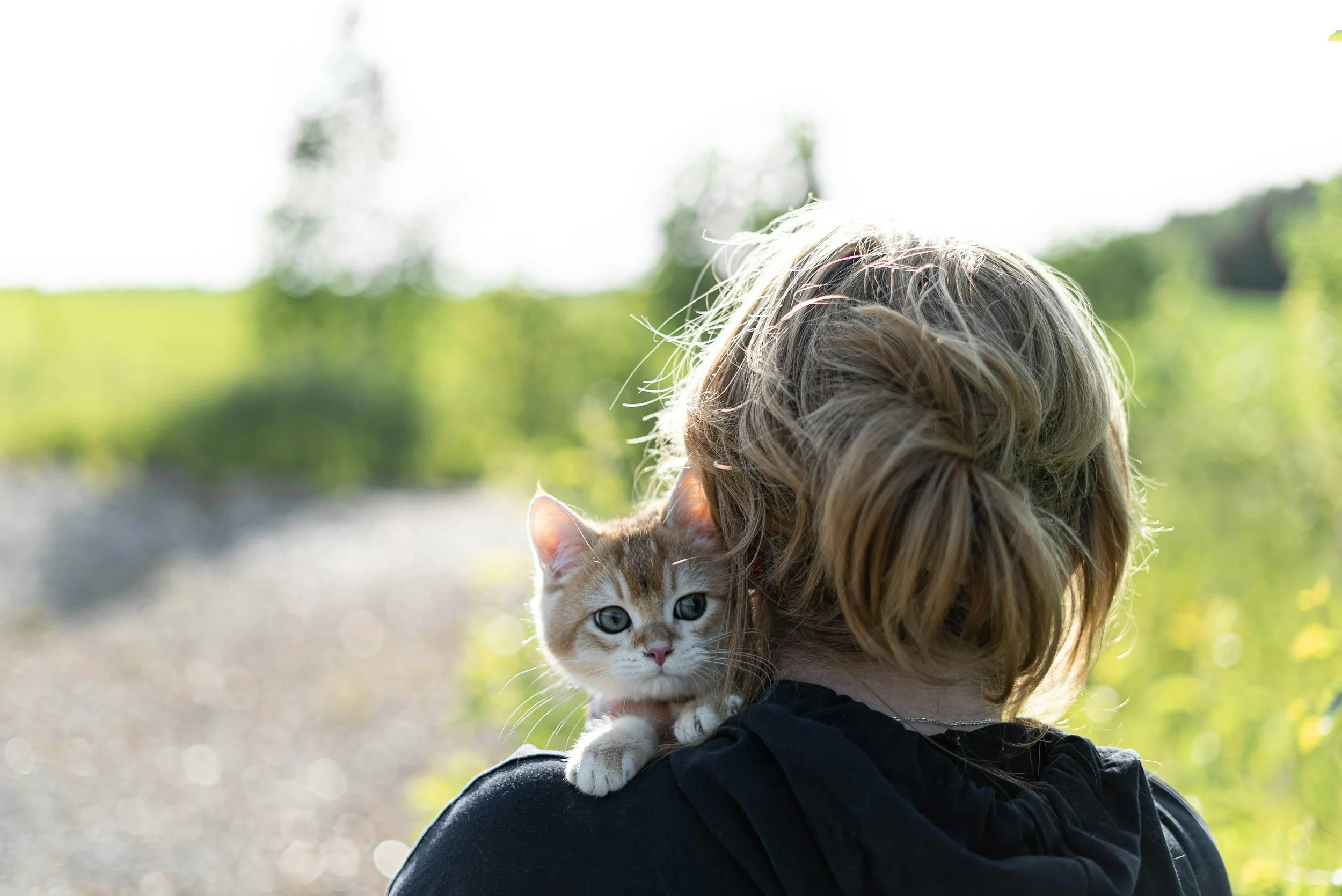
Loving Them Now
Anticipatory grief asks us to live with one of love’s hardest truths: what touches us profoundly also leaves us vulnerable. In many ways, our strongest attachment fears gather around the beings from whom we receive the purest love. When our animals become sources of comfort, safety, and joy, the thought of losing them can feel especially difficult to bear.
And yet, perhaps the invitation within anticipatory grief is not to let fear wedge itself between us and the relationship. It is to appreciate the life we are sharing now by giving ourselves more fully to the connection taking shape before us. Grief can then serve as a reminder to return to presence rather than a force that pulls us away from it.
Part of what makes that possible is remembering that our relationship with our animals does not end when they leave the body. The form may change, but connection does not disappear. Our animals do not intend for our bond to become defined by loss when, from their perspective, they are not truly going anywhere. They want to keep partnering with us, including as we work through fear, sadness, and uncertainty.
The path forward asks for kindness toward ourselves and trust in the bond we share. We can respond to our grief with patience instead of judgment. We can trust ourselves more, trust our animals more, and rest more fully in the intelligence woven through life, timing, and change. As that trust grows, anticipatory grief has less power to overtake our experience with our animals.
For now, the invitation is simple: embrace the relationship that is here. Receive the love, comfort, humor, and companionship woven through your shared life. Listen with your heart and stay open to your animal’s messages. One day this chapter will change, but it does not need to end before it ends.
In living this way, we give the relationship the chance to become all that it is here to become. We stay available to the love still unfolding, even in the presence of change.
If anticipatory grief has been weighing on your heart, an animal communication session can offer clarity, comfort, and a stronger sense of connection. You can schedule a session here.

Key Takeaways
Anticipatory grief grows out of love. The stronger our connection with our animals, the more vulnerable we may feel to the possibility of loss. Fear of losing them reflects how profoundly that relationship has touched us.
With animals, anticipatory grief can feel especially intense. They often move with us through formative chapters of life and become woven into our routines, memories, identity, and sense of home. Because of that, fear of losing them can carry much more than simple absence.
Focusing on future loss can change the relationship we have now. When anticipatory grief pulls us into imagined endings, it becomes harder to stay present for the connection taking shape in front of us. Instead of simply being with our animals, we can start rehearsing loss, which clouds the joy of the present.
Certain mindsets can make anticipatory grief heavier. Overidentifying the relationship with the body, taking too much responsibility for longevity, tying our own stability to our animal’s physical presence, and carrying unresolved past loss into the present relationship can all intensify grief and strain our connection.
The relationship does not begin and end with the body. Physical form offers one expression of our bond, but it does not contain the whole of it. Remembering that love and connection extend beyond material presence can counter the fear that death means total disconnection.
Working with anticipatory grief begins with awareness and presence. Acknowledging what you are feeling, noticing when emotion has outpaced the present moment, and returning to what is true right now can help keep grief from taking over the relationship.
Telepathic communication can support the grieving process. Relating to your animal using animal communication can reduce the sense that seeing the body is the only basis for connection. It can also open a more direct dialogue about your concerns, your animal’s journey, and the purpose of the chapter you are sharing together.
Letting go of control can bring the relationship back into balance. We do not need to carry the impossible burden of preventing loss. When we shift from trying to govern outcomes to listening more closely to what our animals need right now, fear loses some of its grip and partnership has more room to emerge.
Support can help when the grief feels too heavy to carry alone. This becomes especially important when older losses still activate somatic responses and intensify the fear you are carrying now. Tending to your own grief can help free the present relationship from pain that does not fully belong to it.
The invitation is to love in the present. Anticipatory grief may be part of loving an animal, but it does not have to define the relationship. We can keep returning to presence and connection while we share this chapter together.